
“O Pensador"
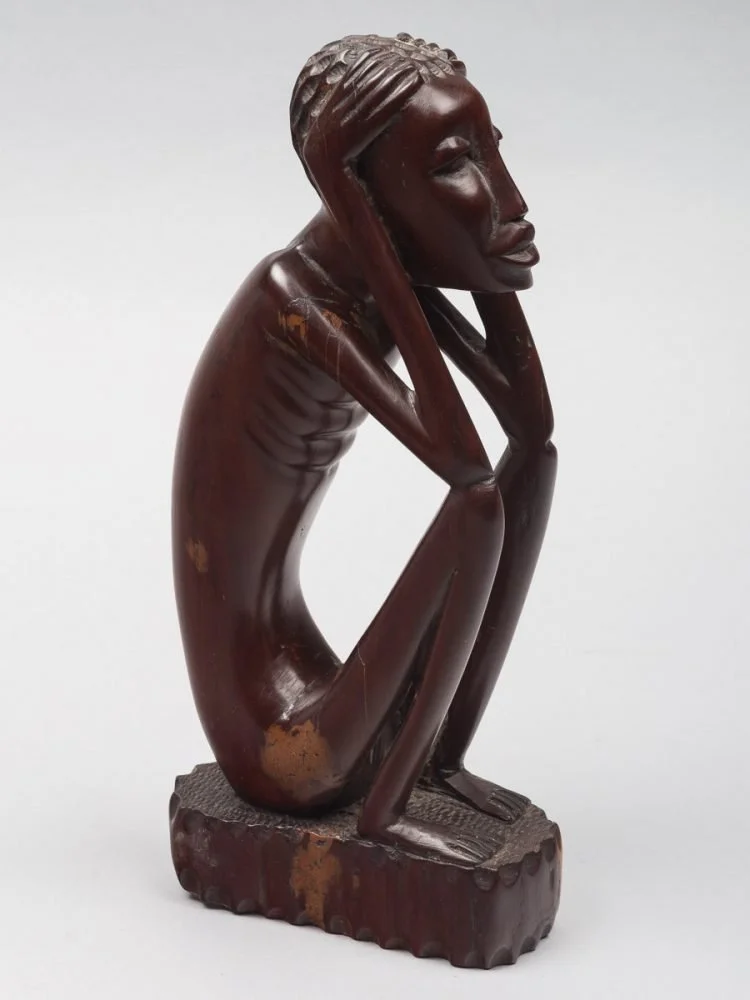
“O Pensador” A key object that holds deep cultural significance for me and many Angolans could relate to is “O Pensador” (The Thinker).
This iconic sculpture, which depicts a person deep in thought, is one of the most famous symbols of Angolan culture, created in the XX Century, 1947 by the Dundo Museum in North Angola, Specifically Lunda-Norte Province. (História de África, 2012). O Pensador represents wisdom, reflection, and the value of introspection, which are important in both traditional Angolan customs and the Christian faith.
For many Angolans, “the figure symbolizes the respect for elders, ancestors, and the wisdom passed down through generations” (Secco, at al., 2010) — values that are deeply intertwined with communal life and spirituality.
In Christian terms, the O Pensador can be seen as a reflection of the call to discernment and contemplation in one’s spiritual journey. Just as the sculpture embodies thoughtful reflection, as a Christian, I am called to meditate on God’s word, seek divine wisdom, and contemplate my faith journey with the same depth.
Proverbs 2:6: “For the Lord gives wisdom; from his mouth come knowledge and understanding.” (NRSV)
In the Christian context, wisdom is a gift from God, and this verse reminds us that true wisdom comes from seeking God’s guidance and meditating on His word.
In Angolan culture, O Pensador symbolizes the respect for elders and ancestors, who are seen as sources of wisdom, offering counsel and life lessons. Similarly, in Christianity, believers seek wisdom from God, who is the ultimate source of knowledge and understanding, much like how the figure of O Pensador reflects thoughtful discernment.
This connection between O Pensador and the Bible shows that contemplation and wisdom are essential in both traditions. The sculpture encourages us to reflect on life’s deeper meaning, while the Bible teaches that the wisdom we seek is ultimately found in God. Together, they emphasize the Christian value of seeking understanding and wisdom through prayer, meditation, and reflection, just as the Angolan figure symbolizes the same journey in cultural terms.
C. Cristóvão